
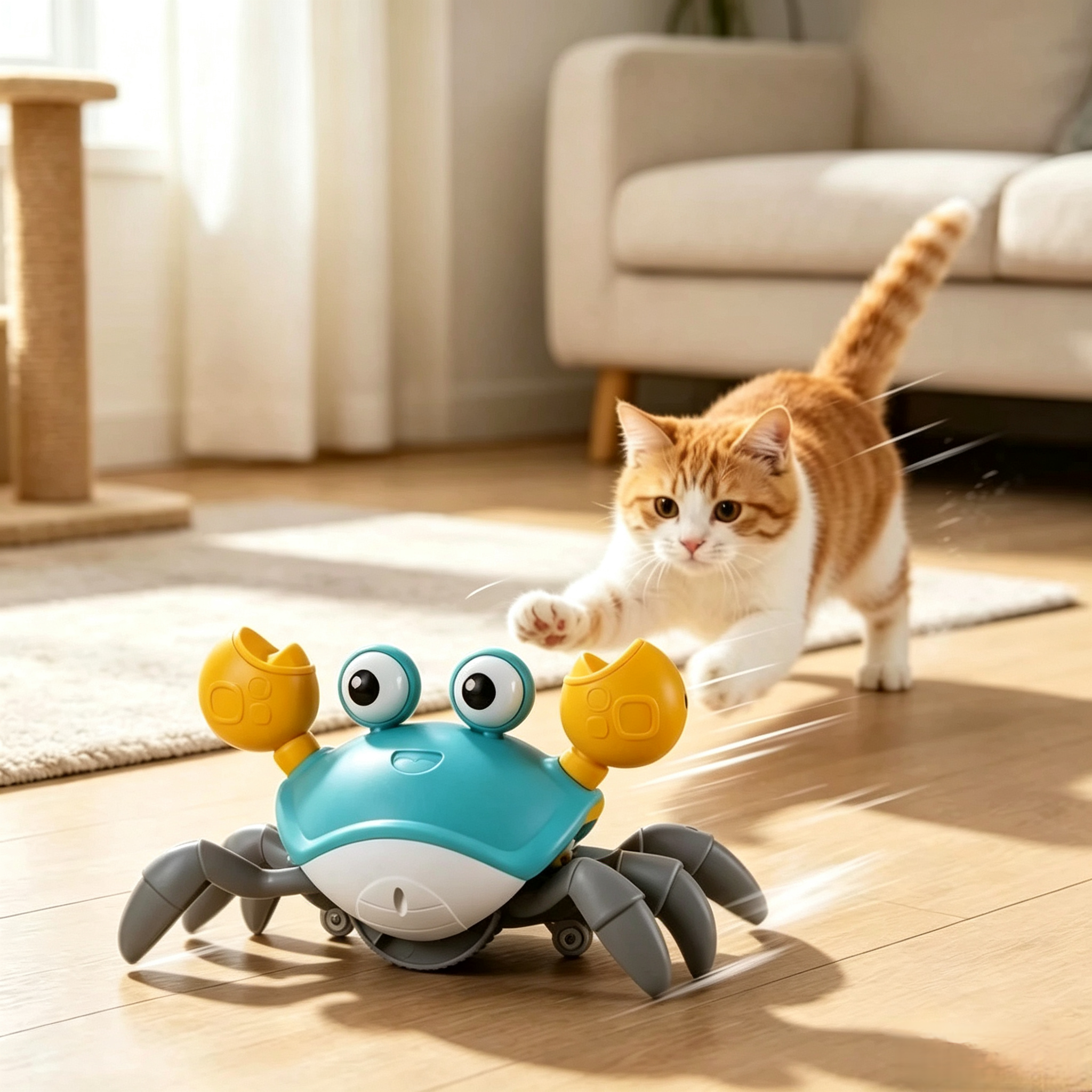
Indoor cats may have everything they need at home, but they can still get bored.Without enough movement, exploration, and play, some cats may become less active, lose interest in their surroundings, or start looking for their own ways to stay entertained.The good news is that you don't need a huge collection of toys. The right cat toys for bored cats can encourage natural behaviors such as chasing, batting, scratching, hunting, and problem-solving. In this guide, we'll show you how to choose toys based on your cat's personality and create a simple indoor enrichment routine.Explore our Cat Supplies collection to find more ways to keep your indoor cat active and entertained.
How Can You Tell If Your Cat Is Bored?
Every cat has different habits, but boredom may sometimes show up as changes in daily behavior.
Your cat may:
1.Sleep much more than usual
2.Lose interest in toys or activities
3.Become overly demanding for attention
4.Knock things over or get into trouble
5.Repeatedly meow for attention
6.Show less interest in exploring
7.Play aggressively with hands or feet
However, these behaviors can have other causes too. If your cat suddenly changes behavior, especially eating, drinking, or litter box habits, it's better to speak with a veterinarian.
For healthy cats, adding more opportunities for play and exploration can make indoor life more interesting.
What Are the Best Cat Toys for Bored Cats?
The best toy depends on what your cat naturally enjoys.
Instead of choosing toys based only on appearance, watch how your cat plays.
1. Interactive Toys for Cats Who Love to Chase
Some cats love movement.
They may chase a moving object across the floor, or follow something that suddenly changes direction.
Interactive toys can help encourage this natural chasing behavior while giving indoor cats more opportunities to move.
A rotating or moving toy can be especially useful when your cat quickly loses interest in traditional toys.
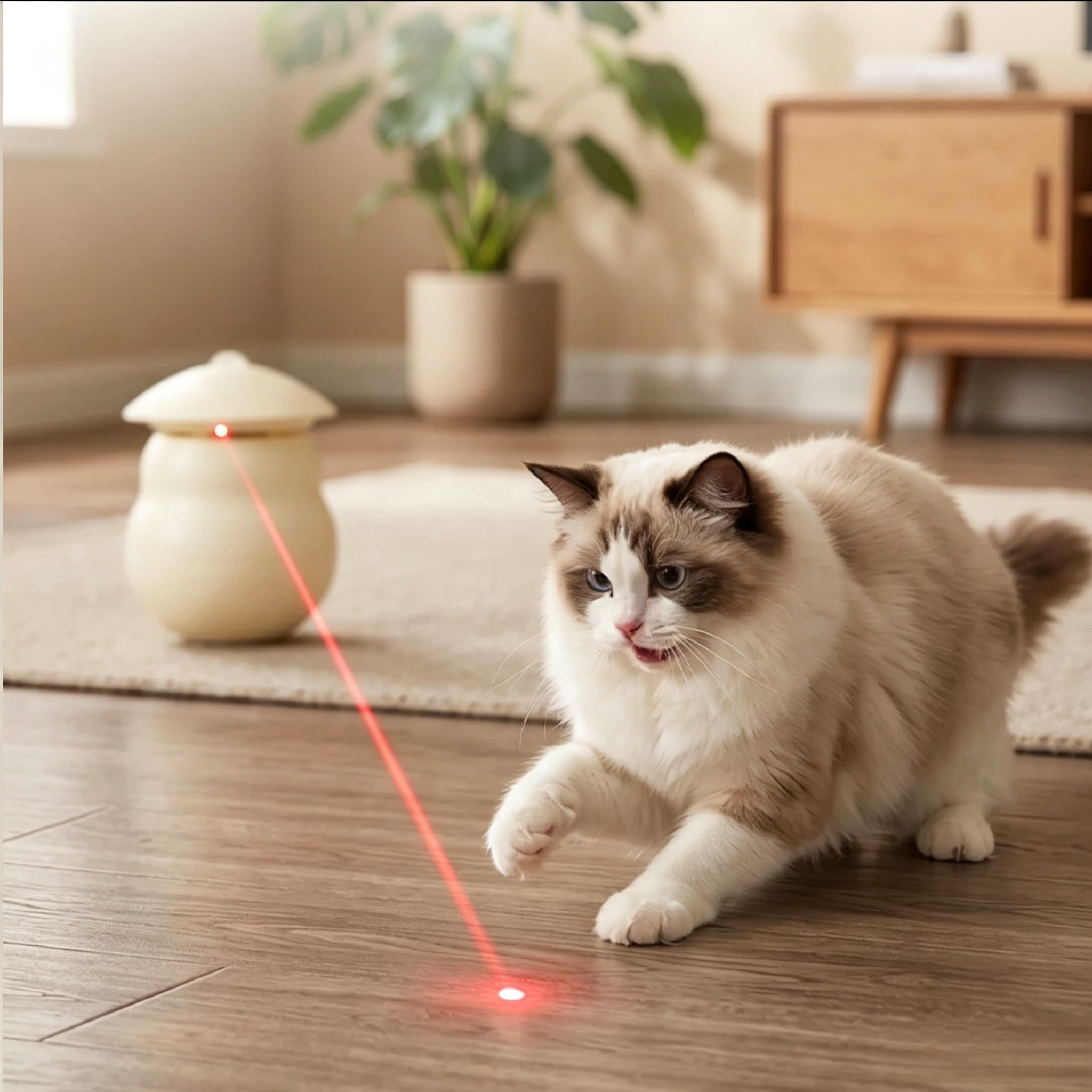
2. Puzzle and Treat Toys for Food-Loving Cats
Does your cat get excited when you open the treat bag?
Puzzle and treat-dispensing toys can turn snack time into a small challenge.
Instead of simply receiving a treat, your cat has to bat, roll, push, or interact with the toy to get the reward.
This type of play can combine food motivation with mental stimulation.
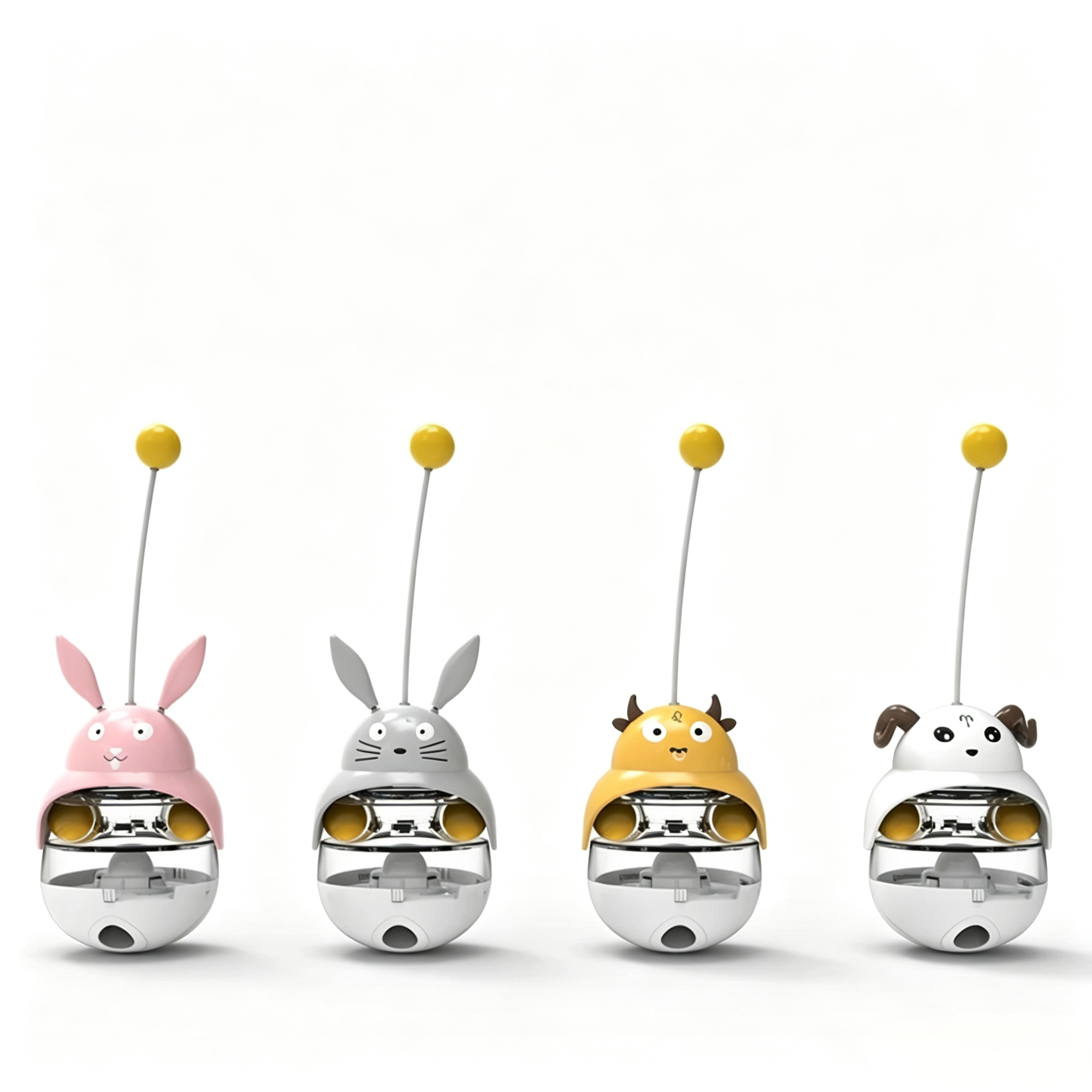
3. Automatic Cat Toys for Independent Play
Some cats want to play even when you're busy。
Automatic toys can provide movement and stimulation without requiring you to control the toy every second.
For example, an interactive automatic cat toy with a suction cup can create movement at floor or wall level while giving your cat something to chase and investigate.
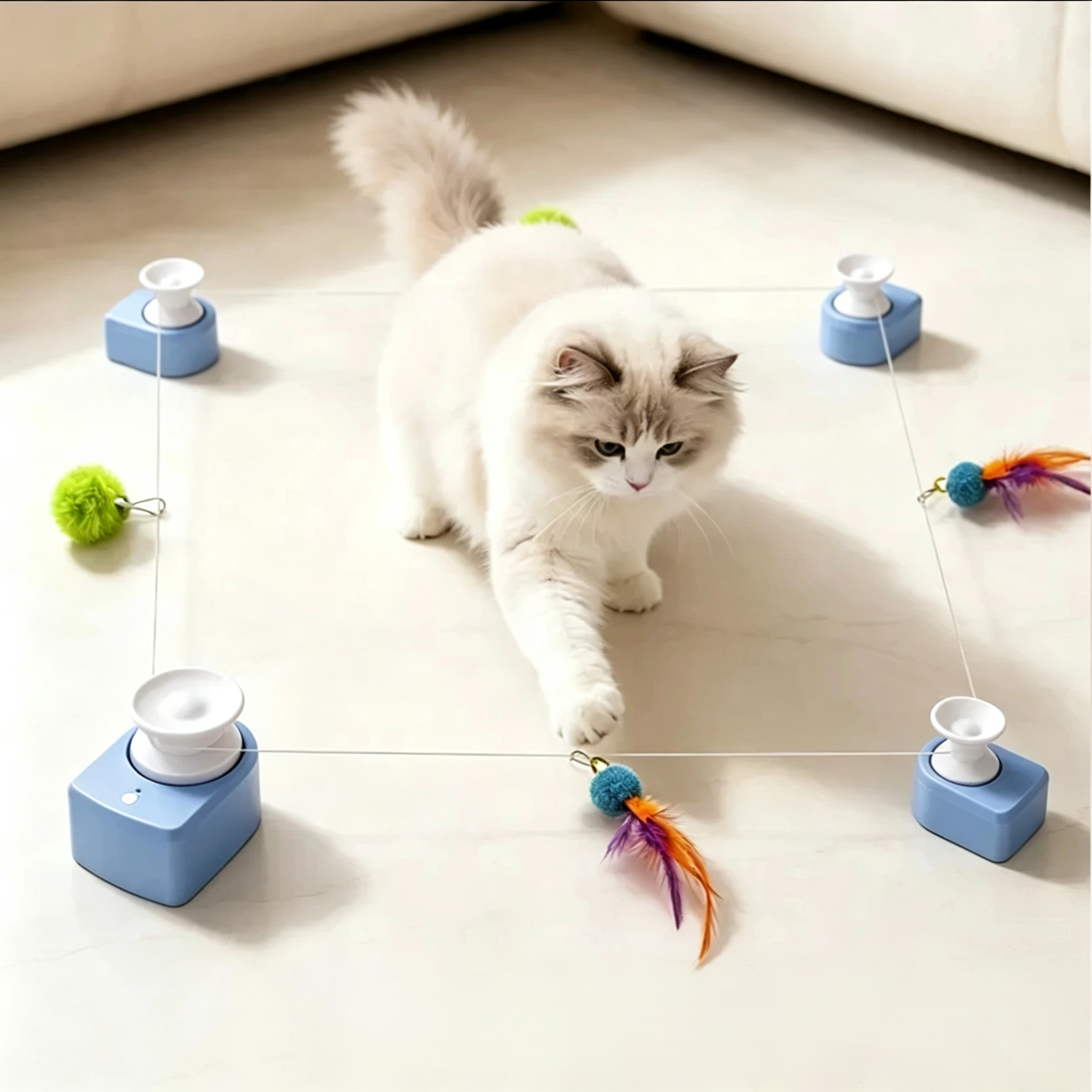
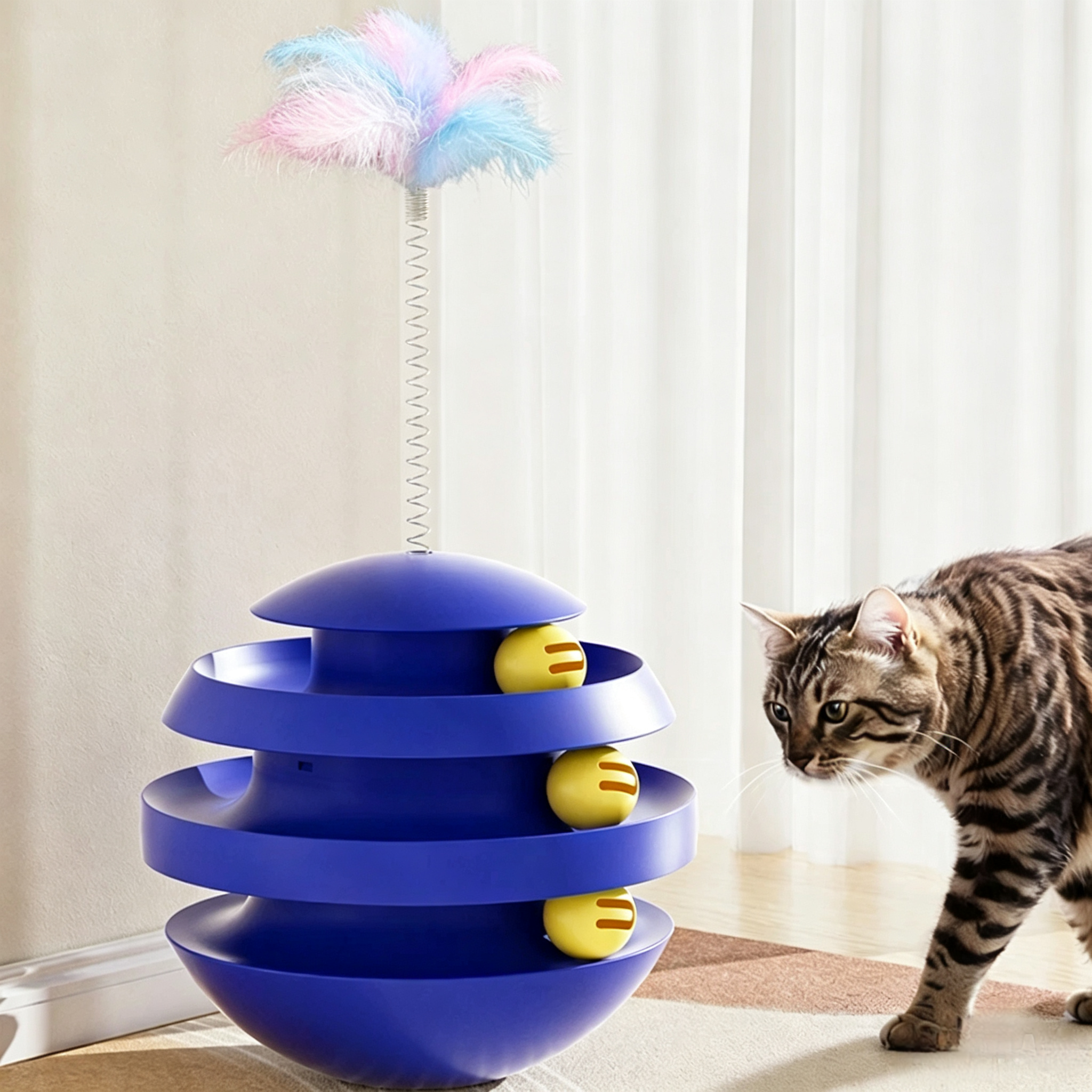
4. Spinning and Rolling Toys for Cats Who Love to Bat
Not every cat wants to chase.
Some cats prefer sitting in one place and batting at something that moves, spins, or rolls.
Spinning toys, turntables, and rolling balls can encourage paw movement and curiosity while keeping play simple.
Choose Toys Based on Your Cat's Play Style
Before buying more toys, take a moment to understand your cat's favorite type of play.
The Chaser
Your cat runs after moving objects and loves fast movement.
Try:
1.Moving toys
2. Teaser toys
3.Rolling balls
4.Automatic toys
The Hunter
Your cat likes to stalk, wait, and suddenly attack.
Try:
1.Wand toys
2.Moving prey-style toys
3.Toys that change direction
4.Short interactive play sessions
The Problem Solver
Your cat enjoys figuring things out, especially when treats are involved.
Try:
1.Puzzle feeders
2.Treat-dispensing toys
3.Food puzzles
The Batting Expert
Your cat prefers sitting, reaching, and hitting toys with its paws.
Try:
1. Spinning toys
2. Ball tracks
3. Turntable toys
4. Hanging toys
The Independent Player
Your cat likes playing alone while you are working or doing other things.
Try:
1.Automatic toys
2.Rolling toys
3.Interactive floor toys
4.Toys that can be safely used without constant supervision
Understanding your cat's play style can help you choose fewer but more useful toys.
Why Does My Cat Get Bored With Toys?
Have you ever bought a new toy, only to find your cat loses interest after a few days?
That's normal.
Cats can become familiar with the same toy when it is available all the time.
One simple solution is toy rotation.
Instead of leaving every toy on the floor, keep some toys stored away and bring out a few at a time.
For example:
Monday:
Interactive moving toy + ball
Wednesday:
Puzzle toy + treat dispenser
Friday:
Spinning toy + teaser
Sunday:
Bring back an older favorite
Rotating toys can make familiar toys feel more interesting again.
You don't necessarily need to buy new toys every week.
Create a Simple Enrichment Setup
A good indoor play area doesn't need to be complicated.
Try creating several different activity zones:
Play:
Keep a few interactive toys available.
Scratch:
Provide a suitable scratching surface for natural scratching behavior.
Rest:
Give your cat a comfortable place to relax after playing.
Explore:
Use different heights, boxes, tunnels, or safe areas for exploration.
A product such as a 2-Tier Accordion Scratching Lounge can combine scratching, movement, and resting in one area.
The goal isn't to fill your home with pet products. It's to give your cat different ways to move, explore, and relax.
Make Play More Like a Hunt
Many cats naturally enjoy a simple sequence:
Watch → Stalk → Chase → Catch → Reward
You can use this idea during playtime.
Move a toy slowly at first.
Let your cat watch it.
Then change direction and speed.
Give your cat a chance to chase and catch it.
For food-motivated cats, you can finish with a small treat or meal.
This makes play feel more like an activity instead of simply moving a toy around.
How Much Play Does an Indoor Cat Need?
There isn't one perfect amount for every cat.
Age, personality, health, energy level, and lifestyle all matter.
Instead of focusing only on the clock, watch your cat's behavior.
Short play sessions throughout the day can be easier to maintain than one long session.
For example, you could try:
1. 5–10 minutes in the morning
2. A short session during the afternoon
3. 5–10 minutes before bedtime
Some cats will want more, while others may prefer shorter sessions.
The important thing is to give your cat regular opportunities to move and interact with its environment.
Final Thoughts
The best cat toys for bored cats are not necessarily the most expensive or complicated ones.
Start by watching how your cat naturally plays.
Does your cat chase?
Does it hunt?
Does it love treats?
Does it prefer batting at moving objects?
Does it enjoy playing independently?
Once you understand your cat's play style, you can choose toys that match its natural behavior and create a more interesting indoor environment.
From interactive toys and puzzle feeders to automatic toys and scratching spaces, a few well-chosen activities can make everyday life more engaging for indoor cats.